Going German

Craigslist is a dangerous place. While reading a post in the Fuji forum about the Zeiss 50mm Ultron, I ran across a craigslist posting selling a copy of this lens with an Icarex body. Met up with the seller, and after a little negotiation, I welcomed another lens to the stable.

From what I can gather from the web, this lens is a Voigtlander design that was given the Zeiss label when Voigtlander was purchased by Zeiss. It has a concave front element (again, German engineering answering a question that was never asked). My copy has an M42 mount, but it was also available in the native Icarex bayonet mount.

This is my first piece of German glass. I don't count the Voigtlander 58mm Nokton I owned several years ago as it was a Japanese built and designed lens. It's a hefty piece of glass, but it's also the smallest 50mm I've owned (that makes it the most dense) short of the Nikon 50mm f/1.8E pancake lens. The aperture ring is clickless, which makes it difficult to set the aperture on the fly. Filter mount is an Icarex B50 bayonet (don't confuse this with the Hasselblad B50), which makes filters and hoods expensive. There is a B50 to threaded 52mm adapter available.

The lens is wickedly sharp, especially in the center. Contrast is strong (is this the micro contrast that every talks about when they discuss German glass?), especially in bright sunlight. Focusing is relatively easy, although I usually find myself reaching for the wider aperture ring instead of the focus ring. Both rings are about the same width and because of the small size of the lens, are close to each other. Nothing that more use won't be able to correct. There isn't that much CA, which is a pleasant surprise for such an old lens.

Bokeh is nervous though, and can get a bit swirly under the right conditions. It's a look that I find a little disturbing (does it make me nervous?). Flare is also very weird, with a rainbow curve (possibly due to the concave front element) and reduced contrast. It's prone to this if the light source is outside of the viewfinder, but not when it's visible in the photo. Veiling flare is a problem, with even blue shirts showing quite a bit of glow. There are only five aperture blades (that overlap in the most complicated pattern I've seen), leading to pentagonal highlights. The pentagons have rounded corners and fuzzy edges, so they're not very distracting. 

Rainbow flare, light source up and to the right. Contrast adjusted in post
Despite all the drawbacks, there are moments when this lens sings and the subject pops out of the frame. It's a combination of the contrast, sharpness and color. Just don't examine the bokeh too closely as the dizziness will start. You do have to identify the situations when this lens will give you an image that sings versus one that croaks.

How does the lens compare to my other "normal" primes? On the plus side it has the most contrast and is the sharpest wide open across the frame. On the minus side it has the worst bokeh and flare characteristics.

Back to the Voigtlander 58mm; the IQ of the Ultron reminds me of that lens, although the Zeiss is sharper wide open. I wonder how that lens performs on the Fuji? I sold mine because normal isn't really a range that I like on an FX body, not because of the IQ. I've ordered an M42 to Nikon F adapter as I'm curious to see how the Ultron performs on an FX sensor.

So now I have a surfeit of ~50mm lenses. Which one to sell?

More from the air

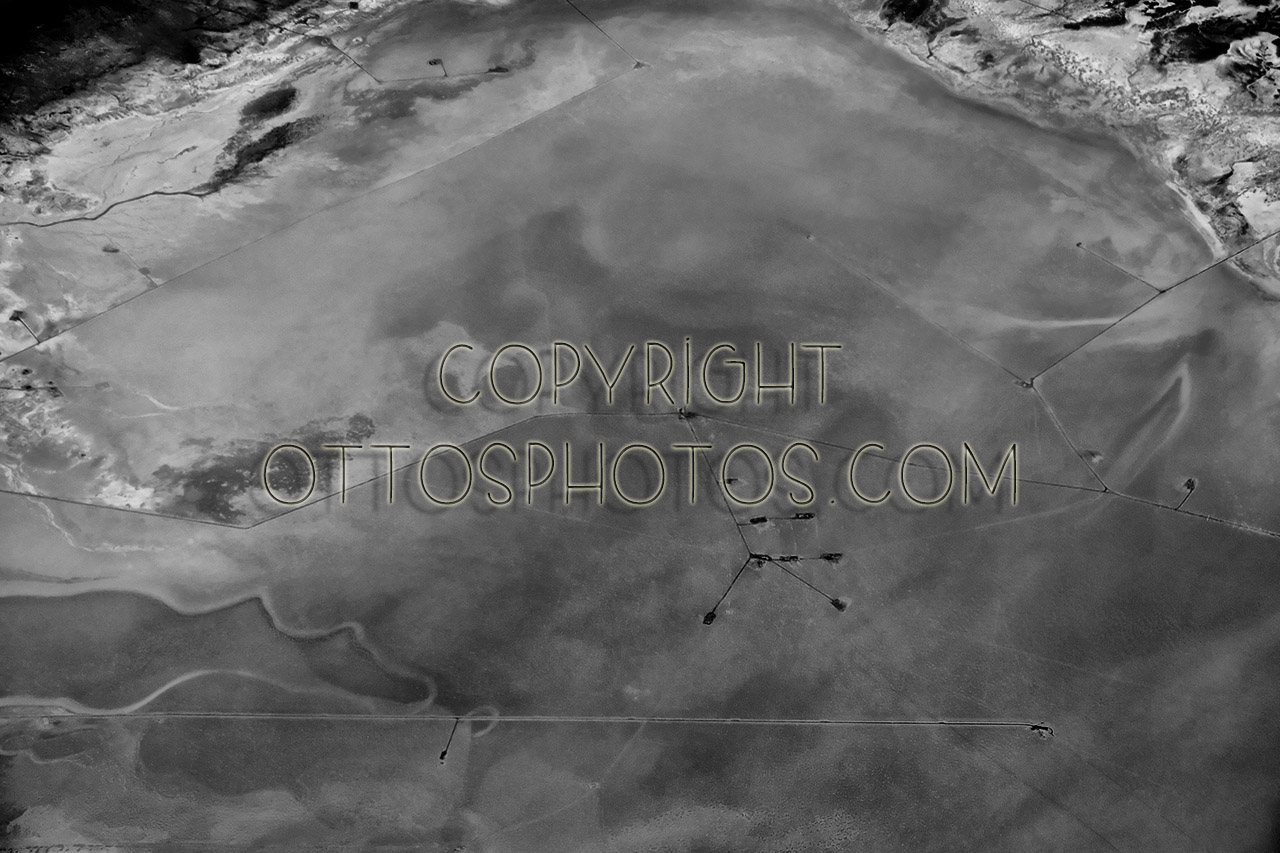
Just a few shots from 35k feet in the air. I still haven't figured out how to fix the color cast of photos taken through a plane window.

Coming home to Fuji

Fujifilm has been a part of my shooting history for a long time. My first film SLR was a Fujica ST-605n, in all its match needle glory. That was followed by an AX-5, the poor man's Canon A1. I loved the multiple exposure modes of that body, and its small, 1980's modern design (despite what Fuji says, I don't see the resemblance in the X-T10). I only had two lenses (the kit 55mm and a 200mm), but managed to take some good photos with it. I also preferred the warmer skin tones of Fuji for color negative film over Kodak film (they haven't aged well though, losing the blue channel on my older strips).

My first digital camera was a Fujifilm MX-1700. A compact camera with a huge 1.5MP of resolution, it served me for a little while, but at its heart it was a p&s. My next p&s was a Fujifilm F45fd, gifted with a sensor that had decent high ISO capabilities for a p&s. I considered some of the Nikon-bodied Fuji DSLRs, but their higher price and weaker specs made them a poor choice. 

But now with the X-trans bodies, it's time to go back home. I whetted my taste for a smaller system with the V1, and got good pictures out of it. Its poor high ISO IQ and limited lenses (where is that 35mm-equivalent lens, Nikon?) made me look at Fuji's X system, with its 16MP X-trans sensor. Scouring craiglist, and doing some negotiation, snagged me an X-E1 body, an 18-55mm kit lens, and 27mm prime for a small amount of money.

The body and lenses are bigger and heavier than my V1 kit, but a lot smaller than the D3 and FX lenses. The battery doesn't last that long because of the EVF, akin to the V1 experience. The lenses mount in the opposite direction to a Nikon F-mount or CX mount.

There's quite a learning curve with the X-E1. The UI isn't as familiar or developed as that of Nikon. For example, you can only zoom in if the focus mode is set to MF, even if the body knows it doesn't have an AF lens connected. There's no mode to allow the rear LCD to come on for menu use yet restrict shooting to the viewfinder. The 27mm doesn't have an aperture ring, so you have to use the command dial to set the aperture (similar to a Nikon DSLR). The 18-55mm on the other hand has an aperture ring, which threw me off one day as I tried to set the aperture using the command dial. The aperture ring is also very loose and electronic with no fixed click stops, requiring constant verification that the aperture hasn't moved by accident. 

Being part of the original X-trans bodies, AF on the X-E1 is a leisurely affair. It is faster than I expected it to be, but it's still a slug compared to Nikon's 1-series, let alone a D3. Native lenses are a bit on the expensive side, even used ones due to the young age of the system. The lenses I have are very good though, and haven't disappointed (although the 27mm needs a hood, something Fuji hasn't released).

The image quality is also very good. High ISO results are up there with the D3200 and D5200 that I've used recently. Colors are on the vibrant side. I haven't played too much with the film simulations; something to do in the future. Out of camera JPGs are excellent, sometimes better than what I get from converting RAW files using ACR. There's a little grittiness to converted images that I have yet to figure out. 

The fun part with the X-E1 is using older lenses. Switching to MF with an EVF requires you to slow down and focus. It's not the run and gun camera like the V1 and D3; it's a throwback to my film days. Not always a good thing, but not always a bad thing either. So far I have an F-mount, an M42, and an X-Fujinon adapter. There's a bit of play with all the adapters I've bought, and my 55mm f/1.2 will only go on the F-mount adapter with a lot of force. I almost bought a Metabones Speed Booster, but after thinking it over, I'm better saving up for the Fujinon 23mm instead of adapting my Nikon 35mm without AF.

I would love to have the Fujinon 23mm f/1.4 lens for general shooting, but at this point in time it's a bit too expensive. Down the road I can see myself upgrading to an X-T1 or X-E2 for the faster AF, but for now I can make do with slow AF.

Additional nits to pick:
1. The lens release button is too small and too close to the lens mount. I have small fingers, and I still have to use two hands to release the lens, unlike with my Nikon bodies. Not very convenient for lens switching.
2. The viewfinder is all the way off to the left, another thing to get used to.
3. I haven't found much of a use for the shutter speed dial; Nikon's command and control dials make switching aperture and shutter so much easier without having to look away from the viewfinder (in fairness the X-T1 has two dials).
4. The battery door is hinged on the wrong side and makes it difficult to remove the SD card (again, despite my small fingers).

Overall, I am enjoying the X-E1, and am looking forward to getting the most out of it. It's been a long time, but it's great to be back.

Olympus body cap fun

Craigslist can sometimes be a source of fun spending. I ran across an Olympus 15mm f/8 body cap for a good price, and found a Panasonic Lumix GF2, also at a good price, to mount it on. 

I decided to set the camera to a square crop as a challenge. It's been a little difficult. I started out shooting obviously square things, but that didn't really work out. I've tried different things such as centering the subject, offsetting to the bottom or to the side. I'm not that happy with the results, but this is an ongoing challenge to stretch. 

 The body cap is an odd lens. There's some distortion, the corners aren't that good, and shooting at f/8 is best left for bright sunlight or web viewing. I've also cranked up the saturation to give the images that playful, toy camera look. 

Using the GF2 reminded me of why I gave up on the Olympus EP-1 a few years ago: I still can't compose using the rear LCD screen. But the combination of the two can be fun. Small and very pocketable, more so than the V1. Not having to worry about focus can make for some fast, discreet shooting.

The challenge continues. In the end I'll probably give up on the GF2 as I don't need a fourth system (hmm, F-mount, CX, m43, and what's the fourth?). But the two cost so little that it's fun just to have another option.

Manual focus for sports

Make that for one sport. I snagged a trio of Nikon E lenses a few months ago (the collection is growing), and finally had time to give one of them a try. With the 100mm f/2.8E in hand (along with the 35mm f/1.8G ED), I did my usual tour of the city.

The lens is tiny, as are most MF lenses compared to their AF counterparts. It's a bit unbalanced on the D3, and would make a better fit on a DSLR without a vertical grip. Using the aperture ring on the lens to set the aperture brings back fond memories of the old days with my EM and Fujica film bodies. The focus action is smooth, although not up to the level of a Nikkor lens. The E lenses were Nikon's attempt at challenging the proliferation of third party lenses, and so don't have the same build quality and optical performance of their regular lens line.
Nikon 105mm f/2 DC and 100mm f/2.8E with HB-31 hood
As I wandered through the city, I decided to zigzag around Chinatown to look for some corners that I hadn't photographed before. I ran across several volleyball games going on at the Willie "Woo Woo" Wong Playground, and thought I'd try to take a few shots.

The only time I tried MF for sports was a painful 30 minutes trying to capture surfing with the V1 and Sigma 500mm. Painful because that combination results in very, very tight framing, and is unwieldy when you're trying to MF.

I did a lot better this time. Yes, I missed focus quite a lot, shooting at f/5.6 through the fence. Timing of course is an issue, but I never said I was a pro. Some of the shots have the player's hand right on the ball, making it look more like a basketball game than volleyball. It took me some time to remember that I was shooting action and switch to manual exposure to keep the shutter speed up.

But I did snag some keepers, leaving me pretty happy. 

Hit rate: 27/732, or 4%